
Menstrual cramps are common, but that does not mean women should have to live with severe pain every month. For some women, period pain is mild and lasts only a few hours. For others, it can interfere with daily activities, disturb sleep and make it difficult to concentrate at work or school.
This condition is medically known as dysmenorrhea. It can occur due to the natural contractions of the uterus or because of an underlying gynaecological condition that requires medical attention.
If you are looking for Dysmenorrhea Treatment in Greater Noida West, understanding the causes, symptoms and available treatment options can help you take the right steps towards better menstrual health.
At Wonder Wombs, women can explore information about women’s health and gynaecological care to better understand their concerns and discuss appropriate medical guidance.
What Is Dysmenorrhea?
Dysmenorrhea is the medical term for painful menstrual periods. The pain usually occurs in the lower abdomen and may spread to the lower back or thighs.
During menstruation, the uterus contracts to shed its lining. These contractions are influenced by substances called prostaglandins. When prostaglandin levels are high, the contractions may become stronger and more painful.
Although mild cramps are common during periods, pain that regularly affects your daily routine should not be ignored.
The severity of menstrual pain varies from woman to woman. Some women experience discomfort for a short time, while others may have cramps, nausea, headaches or fatigue for several days.
What Causes Painful Periods?
Understanding the cause of menstrual pain is an important part of finding suitable treatment. Dysmenorrhea is generally divided into two main types.
1. Primary Dysmenorrhea
Primary dysmenorrhea refers to menstrual pain that is not caused by an underlying reproductive health condition.
It commonly begins during adolescence and may continue into adulthood. The pain usually starts shortly before or at the beginning of menstruation and improves within a few days.
Common symptoms include:
- Cramping in the lower abdomen.
- Pain that spreads to the lower back or thighs.
- Nausea or digestive discomfort.
- Headaches and tiredness.
- Difficulty carrying out normal daily activities.
Depending on the severity of the symptoms, treatment may include suitable pain-relief medication and supportive measures such as applying gentle heat.
2. Secondary Dysmenorrhea
Secondary dysmenorrhea occurs when menstrual pain is associated with an underlying medical condition.
Some possible causes include:
Endometriosis: This condition occurs when tissue similar to the lining of the uterus grows outside it. It can cause severe menstrual cramps and pelvic pain.
Adenomyosis: This condition develops when tissue similar to the uterine lining grows into the muscular wall of the uterus. It may cause painful periods and heavy bleeding.
Uterine fibroids: These are non-cancerous growths in or around the uterus that can sometimes contribute to menstrual discomfort or heavy periods.
Pelvic inflammatory disease: This infection affects the female reproductive organs and may cause pelvic pain.
When menstrual pain becomes progressively worse, continues beyond menstruation or occurs alongside unusual bleeding, a gynaecological assessment may help identify the underlying cause.
Common Symptoms of Dysmenorrhea
Dysmenorrhea does not feel the same for every woman. The symptoms may range from mild cramps to pain that makes everyday activities difficult.
Common symptoms include:
- Pain or cramping in the lower abdomen.
- Lower back pain.
- Pain spreading to the thighs.
- Nausea or vomiting.
- Headaches.
- Diarrhoea or digestive discomfort.
- Fatigue and weakness.
Some women experience these symptoms only during the first day of their period, while others have discomfort for longer.
Keeping track of your menstrual cycle and symptoms can help you recognise changes and explain your concerns more clearly during a medical consultation.
Dysmenorrhea Treatment in Greater Noida West: Available Treatment Options
The appropriate treatment depends on the cause of the pain, the severity of symptoms and your overall health.
Women searching for Dysmenorrhea Treatment in Greater Noida West should consider consulting a qualified gynaecologist if menstrual pain is severe, persistent or affecting their quality of life.
Medication for Period Pain
Anti-inflammatory medicines, including certain non-steroidal anti-inflammatory drugs (NSAIDs), are commonly used to manage primary dysmenorrhea.
These medicines help reduce the effects of prostaglandins, which contribute to uterine contractions and menstrual cramps.
However, pain-relief medicines are not suitable for everyone. A doctor can advise you on the appropriate option based on your medical history and any other medicines you take.
If pain continues despite treatment, further evaluation may be necessary.
Hormonal Treatment
Hormonal treatment may be recommended for women who experience persistent menstrual pain or have certain underlying gynaecological conditions.
Depending on individual circumstances, treatment options may include hormonal contraceptives or other hormonal medicines.
These treatments can help reduce menstrual pain and may also make periods lighter. The choice of treatment depends on medical history, individual needs and reproductive plans.
Hormonal medicines should only be used under appropriate medical supervision.
Treatment for Underlying Conditions
When menstrual pain is caused by endometriosis, adenomyosis, fibroids or another medical condition, treatment needs to address the underlying problem.
A gynaecologist may recommend an examination, ultrasound or other investigations depending on the symptoms.
Treatment may involve medication, hormonal management or a procedure in selected cases. The appropriate approach depends on the diagnosis and individual health requirements.
Identifying the cause of persistent period pain can help ensure that treatment is directed towards the actual problem rather than only providing temporary relief.
Home Care Tips That May Help Relieve Period Pain
Along with medical treatment, some simple measures may help make menstrual discomfort easier to manage.
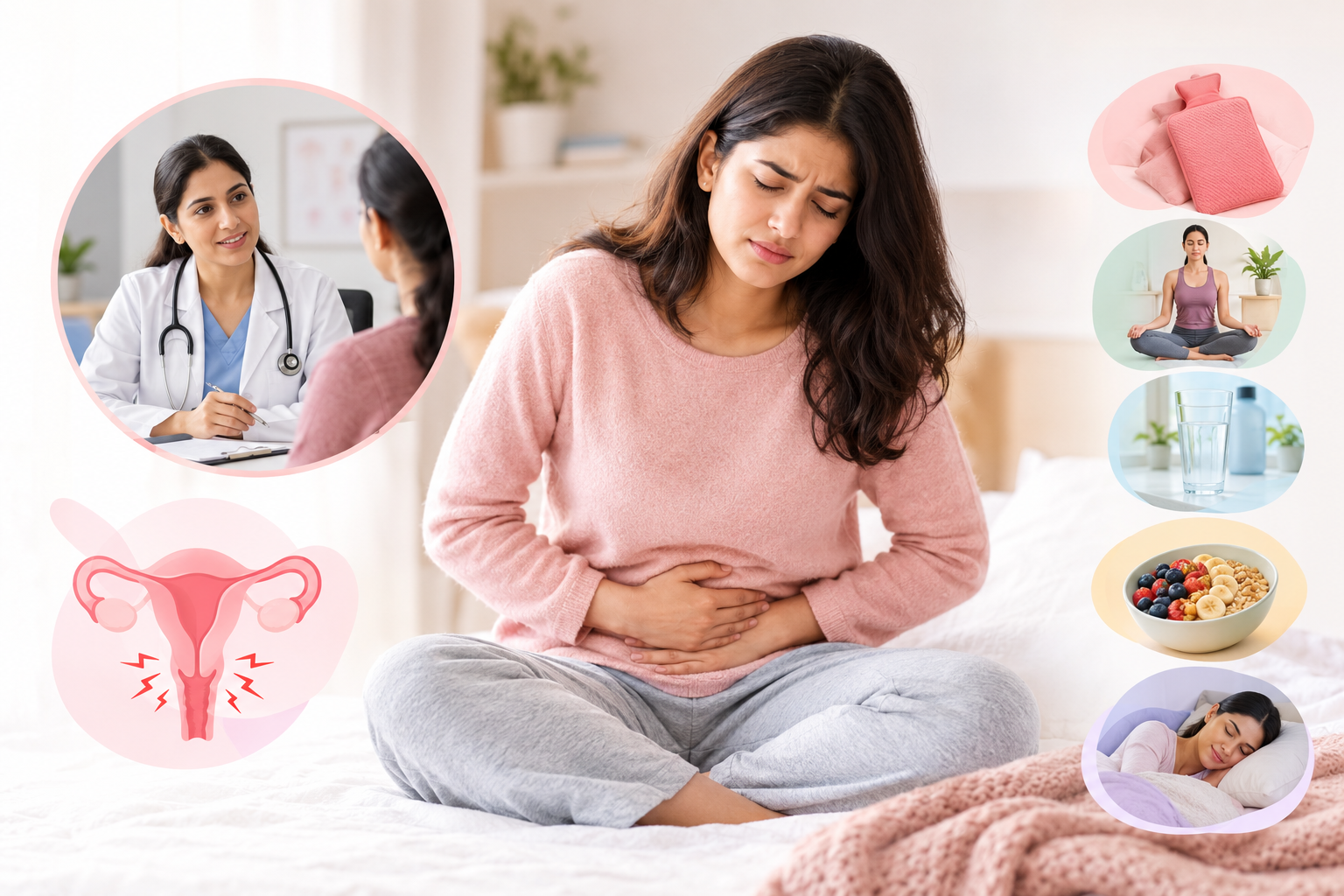
Apply gentle heat: A heating pad or hot-water bottle wrapped in a towel can help relax the muscles and ease cramps. Avoid excessive heat to prevent burns.
Try gentle exercise: Walking, stretching or light yoga may help some women feel more comfortable during menstruation.
Get adequate rest: Poor sleep can make it harder to manage pain. Try to maintain a regular sleeping schedule, particularly during your period.
Stay hydrated: Drinking enough water supports general health and can help you maintain your usual routine during menstruation.
Track your symptoms: Record when the pain starts, how long it lasts, how heavy your bleeding is and whether the symptoms change from month to month.
These measures may provide relief, but they should not replace medical care when the pain is severe or unusual.
When Should You Consult a Gynaecologist?
Many women assume that severe period pain is simply part of having a menstrual cycle. However, pain that repeatedly interferes with daily life deserves medical attention.
Consider consulting a gynaecologist if:
- Your menstrual cramps are severe or getting worse.
- Pain prevents you from attending work, school or regular activities.
- Your periods become unusually heavy or irregular.
- You experience pelvic pain between periods.
- You have pain during sexual intercourse or while passing urine or stools.
- Your usual pain-relief measures no longer help.
- You develop severe menstrual pain after previously having relatively comfortable periods.
Sudden, severe pelvic pain, particularly when accompanied by fainting, fever, heavy bleeding or a possibility of pregnancy, requires urgent medical assessment.
Seeking timely medical advice can help identify possible causes and determine the most appropriate treatment.
How Can a Gynaecologist Help With Dysmenorrhea?
A consultation for painful periods generally begins with a discussion about your menstrual history and symptoms.
Your gynaecologist may ask when the pain starts, how long it lasts, whether your periods are regular and how the discomfort affects your daily activities.
Depending on your symptoms, the doctor may recommend an examination or an ultrasound to investigate possible underlying conditions.
Not every woman requires the same tests or treatment. The medical approach depends on the symptoms, examination findings and individual health needs.
For women experiencing persistent period pain, professional guidance can help clarify whether the symptoms are consistent with primary dysmenorrhea or whether further investigation is needed.
Women’s Gynaecological Care at Wonder Wombs
Menstrual health is an important part of overall well-being. Persistent period pain can affect physical comfort, emotional well-being, work and everyday responsibilities.
Wonder Wombs focuses on women’s health and fertility care. Women experiencing menstrual discomfort can explore the available gynaecological care options and seek appropriate medical guidance for their concerns.
If you are searching for Dysmenorrhea Treatment in Greater Noida West, discussing your symptoms with a qualified gynaecologist can help you understand the possible causes and available treatment approaches.