
The teenage years bring many physical, hormonal, and emotional changes. For girls, the transition from childhood to adolescence can sometimes come with concerns such as irregular periods, painful menstruation, excessive bleeding, acne, hormonal changes, vaginal infections, or questions about reproductive health. While some of these changes are a normal part of growing up, others may need medical attention.
Adolescent gynecology in Greater Noida West focuses on providing age-appropriate gynecological care for teenage girls and young women. At Wonder Wombs, the aim is to create a comfortable and supportive environment where adolescents can discuss their concerns without hesitation.
What Is Adolescent Gynecology?
Adolescent gynecology is a specialized area of women’s healthcare that addresses gynecological and reproductive health concerns during the teenage years.
A young girl may have questions about her first period, menstrual cycle, period pain, personal hygiene, hormonal changes, or other health concerns. Early guidance from a qualified gynecologist can help her understand what is normal and when medical advice may be necessary.
The approach is generally age-appropriate and focuses on education, prevention, diagnosis, and treatment while maintaining the young patient’s comfort and privacy.
Common Gynecological Concerns in Teenage Girls
Every teenager is different, but some gynecological concerns are relatively common during adolescence.
1. Irregular Periods
Periods may not be completely regular during the first few years after menstruation begins because the hormonal system is still developing. However, very irregular periods, prolonged gaps between periods, or consistently unpredictable cycles should be discussed with a gynecologist.
Sometimes irregular periods may be associated with hormonal imbalance, thyroid problems, PCOS, stress, changes in weight, or other underlying conditions.
2. Painful Periods
Mild cramps can occur during menstruation, but severe period pain that interferes with school, daily activities, sleep, or social life should not simply be ignored.
A gynecologist can assess the possible cause of painful periods and recommend suitable treatment and lifestyle measures.
3. Heavy Menstrual Bleeding
Some teenagers experience unusually heavy periods or bleeding that lasts longer than expected. Heavy menstrual bleeding can sometimes lead to tiredness, weakness, or anemia.
If a girl frequently needs to change sanitary products because of heavy bleeding or feels unusually weak during her periods, medical evaluation can be helpful.
4. PCOS and Hormonal Imbalance
Polycystic Ovary Syndrome (PCOS) can sometimes become noticeable during adolescence. Symptoms may include irregular periods, acne, unwanted facial or body hair, or changes in weight.
Not every teenager with irregular periods has PCOS. A proper medical assessment is important before reaching any conclusion.
5. Vaginal Infections and Hygiene Concerns
Teenagers may experience itching, unusual discharge, irritation, or discomfort due to infections or other causes. Maintaining proper menstrual and intimate hygiene is an important part of adolescent healthcare.
Girls should be encouraged to seek medical advice rather than self-treating persistent symptoms.
Why Is Adolescent Gynecological Care Important?
Teenage years are an important stage for establishing healthy habits. Many girls hesitate to talk about menstrual or reproductive health problems because they feel embarrassed or uncomfortable.
A supportive gynecologist can help teenagers understand their bodies and recognize symptoms that should not be ignored.
Regular guidance can help with:
- Understanding menstrual cycles
- Managing period pain
- Identifying abnormal bleeding
- Detecting hormonal concerns
- Understanding PCOS symptoms
- Maintaining menstrual and intimate hygiene
- Addressing recurrent infections
- Learning about healthy lifestyle habits
- Getting answers to age-appropriate reproductive health questions
Early attention to persistent symptoms can also help prevent certain problems from becoming more difficult to manage later.
When Should a Teenager See a Gynecologist?
A gynecological consultation may be considered if a teenager experiences:
- Very painful periods
- Extremely heavy menstrual bleeding
- Periods that remain significantly irregular
- No periods for an extended period after menstruation has started
- Persistent pelvic or lower abdominal pain
- Unusual vaginal discharge, itching, or irritation
- Symptoms associated with possible PCOS
- Severe acne or excessive unwanted hair along with menstrual irregularities
- Recurrent urinary or vaginal infections
- Any gynecological concern causing discomfort, anxiety, or affecting daily activities
Parents should also encourage teenagers to ask questions about their menstrual or reproductive health without feeling embarrassed.
What Happens During an Adolescent Gynecology Consultation?
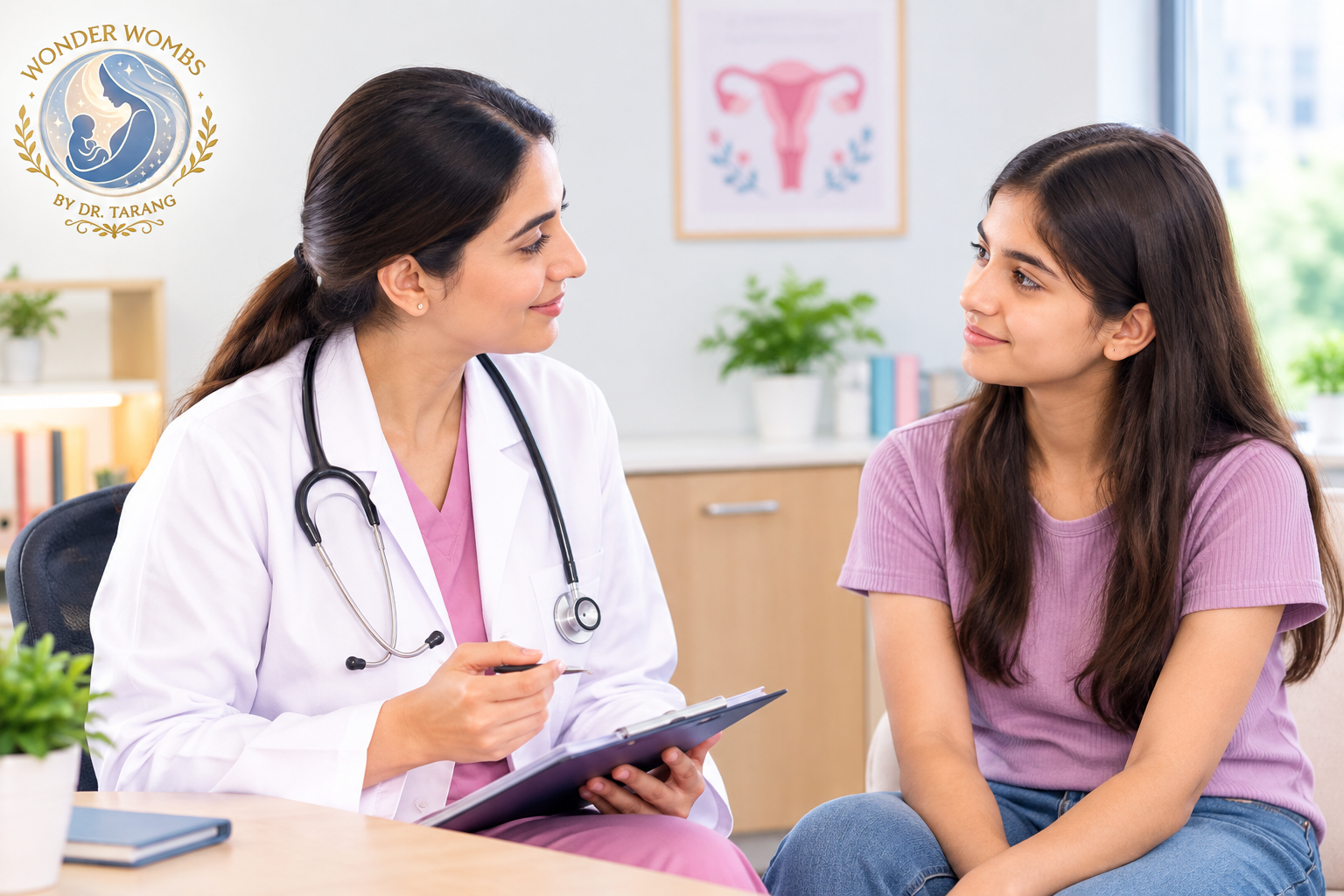
The first consultation is usually focused on understanding the teenager’s concerns and medical history.
The gynecologist may ask about:
- Age when periods started
- Menstrual cycle pattern
- Duration and amount of bleeding
- Period-related pain
- Medical and family history
- Current medications
- Lifestyle and nutrition
- Other symptoms or health concerns
Depending on the symptoms, the doctor may recommend appropriate tests or investigations. Not every teenager needs an extensive examination or testing. The evaluation is based on individual symptoms, age, and medical history.
Supporting Healthy Menstrual Habits
Good menstrual health begins with simple, consistent habits. Teenagers should be encouraged to maintain a balanced diet, stay physically active, get adequate sleep, drink enough water, and maintain appropriate menstrual hygiene.
Keeping track of periods through a calendar or period-tracking app can also be useful. It helps identify changes in cycle length, bleeding patterns, or symptoms that may need medical attention.